How much does bush hogging cost per acre in Florida?
Published cost guides put bush hogging at about $100 to $600 per acre. Open pasture sits near the low end, and overgrown fields with saplings sit near the top. By the hour, a tractor with a 6 foot rotary cutter runs $85 to $120. Many pros also set a 2 to 3 hour minimum.
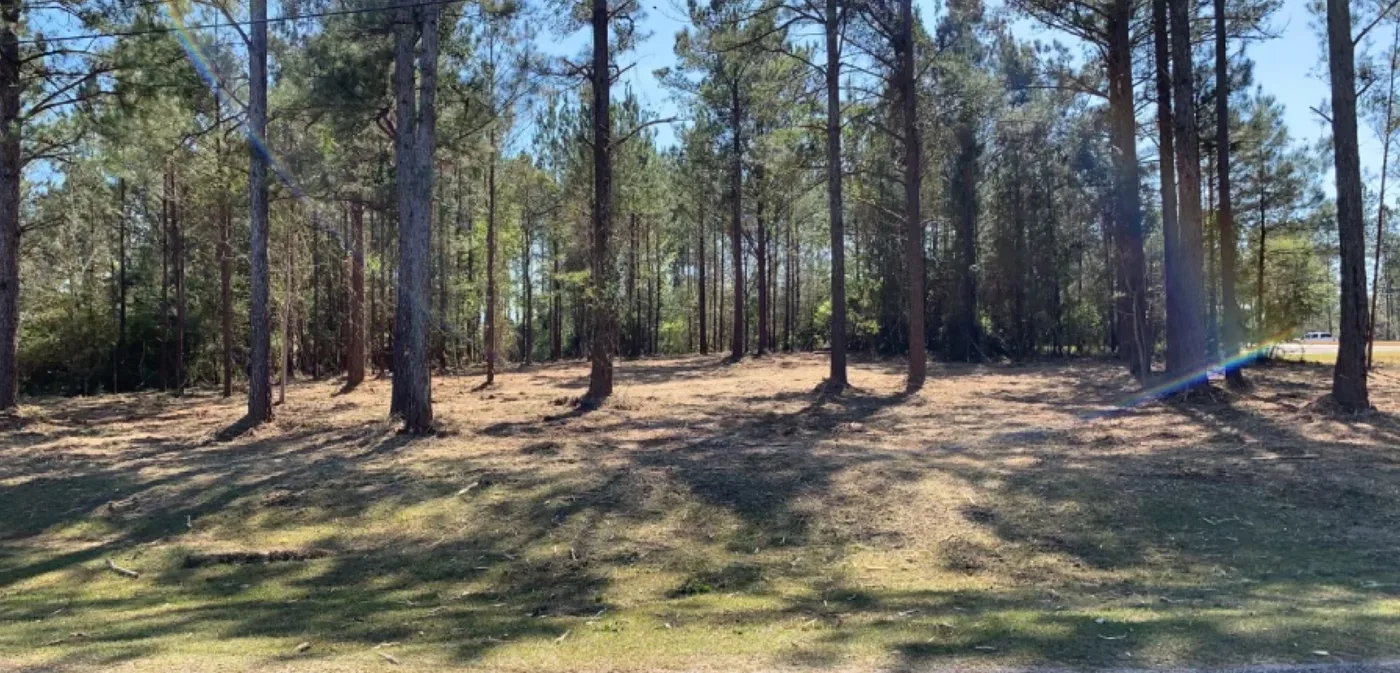
Bush hogging and brush hogging are two names for the same job. A heavy rotary cutter knocks down growth too heavy for a mower and too light for a mulcher. Our brush hogging service page shows that work on the ground.
The market figures here come from published cost guides, UF/IFAS and a city code page. None of the cost guides break out a Florida-only rate, so treat them as market benchmarks. A real number for your land takes an on-site look.
What does brush hogging cost per acre?
Brush hogging runs about $100 to $600 per acre, and the growth decides where a field lands. GreenPal puts relatively open pasture around $100 per acre. The OWNR OPS cost guide puts regular maintenance mowing at $150 to $300. Overgrown fields with tall grass and saplings up to 2 to 3 inches run $300 to $600.
GreenPal surveyed lawn care professionals on what they charge, and its ranges draw on contractor surveys and Extension data. OWNR OPS says most operators offer volume discounts of 10 to 20 percent on projects over 3 to 5 acres.
What does brush hogging cost per hour?
A tractor with a 6 foot cutter runs $85 to $120 an hour in GreenPal’s guide. Rocks, slopes and debris push jobs toward the top of that range. GreenPal advises pricing open fields by the acre, and obstructed or uncertain ones by the hour.
Speed sets the math under both prices. GreenPal puts a 6 foot cutter at about 2.4 to 3 acres an hour in perfect conditions. Real-world speeds are often slower. At 1.5 to 2 acres an hour, the per acre price has to reflect it.
Brush slows the cutter far more. OWNR OPS puts a tractor with a brush hog at 2 to 5 acres of light brush per day.
Small jobs carry a floor. GreenPal says many pros set a 2 to 3 hour minimum or a flat show-up fee. It covers hauling, setup and the risk of hitting something that breaks blades. At $85 to $120 an hour, that minimum lands between $170 and $360.
What does it cost to brush hog 1, 5 or 10 acres?
At published rates, five open acres come to about $500 and ten come to about $1,000. A single acre can bill at a $170 to $360 minimum instead. Heavier growth moves each total up.
One acre is where the minimum can outrun the per acre math. OWNR OPS puts a single pass on light vegetation at $150 to $600 per acre. GreenPal says small jobs often lose money once fuel and transport are factored in.
Five acres of open pasture come to about $500 at GreenPal’s $100 benchmark. The same five acres overgrown with small saplings run $1,500 to $3,000 at the OWNR OPS rate. Cutting five open acres takes about two hours in perfect conditions and 2.5 to about 3.3 hours at real-world speed.
Ten open acres come to about $1,000 before any volume discount. At 1.5 to 2 acres an hour, that is 5 to nearly 7 hours on the cutter. A bigger field also spreads the trip and setup across more acres.
What pushes a brush hogging price up?
Heavy growth and rough ground both push the price up. Taller, thicker growth slows the cutter, and slower acres cost more. Before pricing a job, GreenPal tells pros to clarify acreage, terrain, slopes, fences and junk piles. A fence line buried in brush gets cut back first, ahead of any fence line work.
Hidden obstacles add risk. Next to lawn mowing, GreenPal says the work means burning more fuel and hitting hidden obstacles. An old stump or junk buried in tall grass can break blades or gear. Wet ground slows the work too, and a soft field can rut under a heavy machine.
Extra work gets priced on its own. GreenPal lists debris removal, rocks, slopes, re-cuts and off-haul as items to spell out in advance. It says a clear minimum and a written scope protect both sides. Every free on-site estimate from Clearview comes as a written number.
Is brush hogging cheaper than forestry mulching?
Per pass, brush hogging is cheaper by a wide margin. GreenPal puts open pasture near $100 per acre and forestry mulching at $400 to $800 per acre. That makes mulching four to eight times the per acre price. OWNR OPS calls brush hogging the cheapest choice for light grass and weeds only.
OWNR OPS says brush hogging needs repeating every 6 to 12 months, since stumps and roots stay in the ground. Forestry mulching suppresses regrowth the longest, 2 to 3 years, because the mulch layer blocks sunlight.
OWNR OPS also prices brush clearing by density, across every method. Light brush runs $500 to $2,000 per acre, medium $1,500 to $4,000 and heavy $3,000 to $6,500. Those are national averages, and OWNR OPS files Florida under a Southeast region that tends to run 10 to 20 percent below them. Here is how the three approaches compare.
| Method | Published price per acre | Handles | Leaves behind |
|---|---|---|---|
| Brush hogging | About $100 on open pasture (GreenPal); $150 to $600 a pass (OWNR OPS) | Tall grass, weeds, briars and saplings up to about 2 to 3 inches | A mowed field; stumps and roots stay, so regrowth comes quickly |
| Forestry mulching | $400 to $800 (GreenPal) | Brush and small to medium trees | Mulch-covered ground; regrowth held back 2 to 3 years |
| Brush clearing, all methods | $500 to $2,000 light, $1,500 to $4,000 medium, $3,000 to $6,500 heavy (OWNR OPS) | Light to heavy brush | Walkable land; large trees may remain |
When does a field need a mulcher instead of a brush hog?
A field needs a mulcher when stems get thicker than a rotary cutter can take. OWNR OPS says a brush hog can only handle vegetation up to about 2 to 3 inches in diameter. Anything thicker will jam, damage the mower or get pushed over rather than cut.
GreenPal’s guide switches the job to mulching when trees need grinding. Thicket you cannot push through and young trees are the signs. Forcing a rotary cutter into that growth leaves a chewed finish and a beat-up machine. UF/IFAS makes a related point: large weeds with extensive root systems will not be controlled by mowing alone.
Plenty of properties need both tools. The rotary cutter takes the open field and forestry mulching takes the woody edge. Our mulching runs about an acre a day in typical growth. For ground headed to a build, see what land clearing costs per acre.
How often should a Florida field or pasture be cut?
Brush hogging needs repeating every 6 to 12 months, per the OWNR OPS guide. It expects faster regrowth in the Southeast, where growing seasons are long. UF/IFAS adds a timing rule: a properly timed cut prevents weeds from producing seed.
UF/IFAS calls mowing one of the most often-used weed control methods in pastures. Cut after seed set, though, and seeds can collect on the mowing equipment. The machine then spreads them to other pastures and worsens the weed problem.
Mowing works better on broadleaf weeds than grass weeds, and on annual weeds than perennials. It also improves the look of a pasture and temporarily increases forage production. UF/IFAS adds that mowing misses low, spreading weeds such as crabgrass and spurges.
None of the sources checked here set a count of cuts per year for the Panhandle. Cutting each new flush of weeds before it sets seed keeps that seed out of the ground.
Is an overgrown lot a code problem in Pensacola?
Inside Pensacola city limits, an overgrown vacant lot can be a code problem. The city’s code enforcement office lists a duty to mow and clean non-compliant overgrown vacant properties within the city. A complaint received during regular business hours is investigated that same day.
Officers also flag violations on their own along the city’s main gateway streets. The code enforcement page gives no grass height for the mowing duty. Ask the city’s code office what applies to a given lot, or the county’s office outside city limits.
Clearview brush hogs fields and pastures across Santa Rosa, Escambia and Okaloosa Counties, out of Jay. Twenty-plus years of running machinery sit behind the company. Ask for a free estimate at the property and you get a written number to work from. The number to call is (850) 910-2447.